
Manuel dos Reis Machado
Founder of capoeira regional and modernizer of the art.
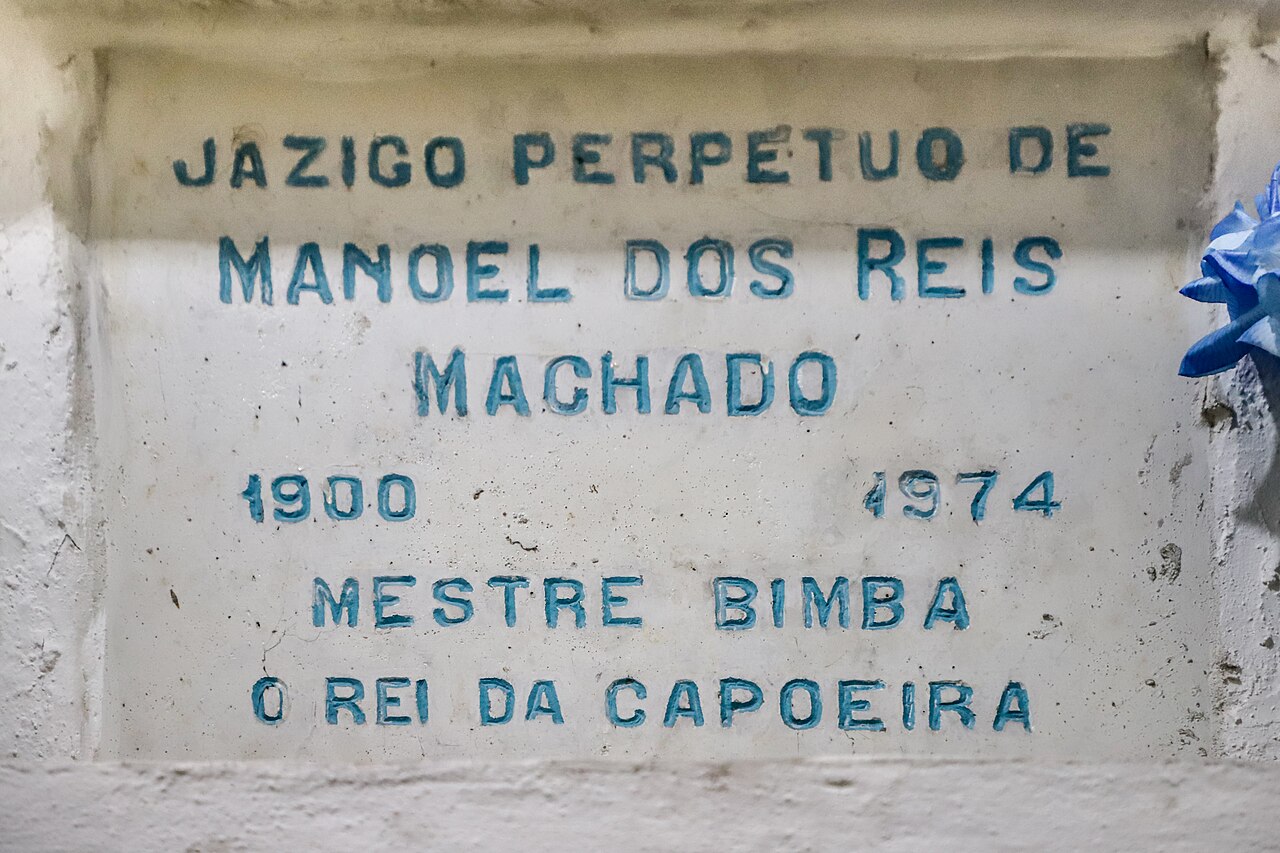
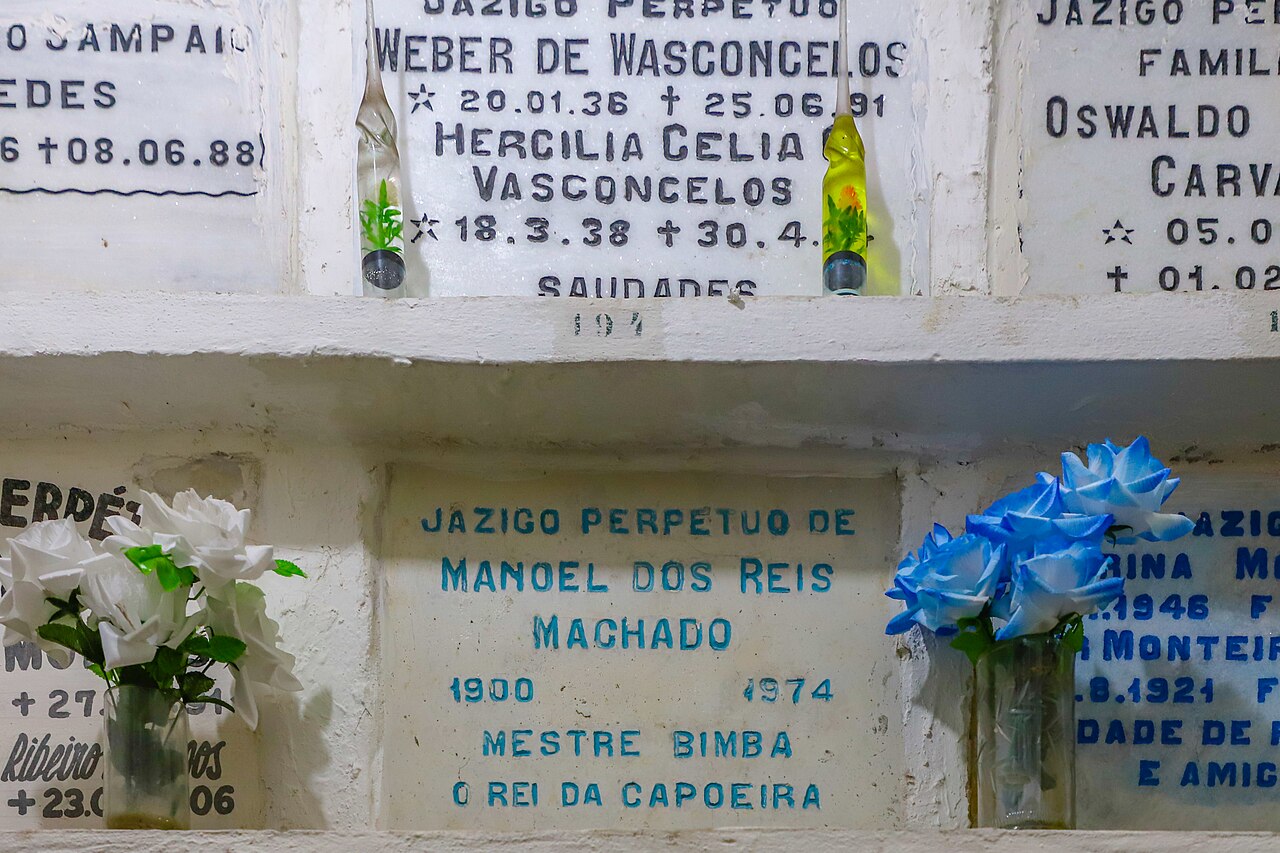
Manuel dos Reis Machado, widely known as Mestre Bimba, was a Brazilian capoeira master who created the regional style of capoeira. His nickname, which literally means "phallus," came from a bet between his mother and the midwife at his birth—his mother thought he would be a girl, and the midwife pointed to his "bimba" to confirm he was a boy. In Brazil, the word also meant "beating." He was born on either November 23, 1899 or 1900, in the Engenho Velho neighborhood of Salvador, one of 25 children of Luiz Cândido Machado and Maria Martinha do Bonfim. Before learning capoeira, he picked up techniques of batuque, a related fighting-dance, from his father, who was a champion in that style. As a young street fighter, he was called Três Pancadas ("three blows") because people said that was all the punches he needed to knock someone down.
Bimba started learning capoeira at age 12 from an African boat commander named Bentinho. By the time he was 18, he felt capoeira had lost its effectiveness as a martial art and become a folkloric activity with only nine movements. So he began restoring moves from older capoeira (later called Angola), adding techniques from batuque, and inventing his own. He was also responding to efforts by Burlamaqui and Sinhôzinho to strip capoeira of music and African traditions, turning it into just physical techniques. Bimba was the first to create a structured teaching method—previously, people learned only by watching and joining the roda. He initially called his style Luta Regional de Bahia, later shortened to capoeira regional. Some sources say he was influenced by other martial arts, such as judo, boxing, and wrestling, and that he studied methods from teachers like Mestre Sinhozinho and Anibal Burlamaqui. Others, including Mestre Itapoan, argue that all his movements came from batuque or capoeira itself, noting that similar techniques existed before Eastern martial arts arrived in Brazil. Bimba encouraged adding effective new kicks to the basic footwork, ginga. In 1936, he said he had removed two kicks and added 15 to traditional capoeira; later, the total reached 52 techniques. The martelo and queixada kicks, which he introduced, became hallmarks of regional style.
In 1928, Bimba demonstrated his style for Bahia's governor, Juracy Magalhães, who then overturned the ban on capoeira in Bahia and encouraged Bimba to open a school. He founded the first capoeira school in 1932, called the Academia-escola de Cultura Regional, in the Engenho de Brotas area of Salvador. To fight capoeira's reputation as a practice of devious, malicious people, he set new standards: students had to wear clean white uniforms, show proof of school grades, exercise discipline, and maintain good posture. This attracted doctors, lawyers, politicians, upper-middle-class people, and women, who had previously been excluded. He did accept some exceptionally poor students, but only if they showed talent or attitude. Initially, he tested new students by putting them in a strong neck lock for three minutes; only those who endured without tapping out were accepted. Later, after his student Cisnando Lima joined, he changed the test to a flexibility demonstration and a written exam. His use of predetermined movement sequences as a teaching method was a major innovation, as was teaching capoeira to a broader audience, which helped spread the art across social groups and contributed to its decriminalization. Bimba was also an excellent singer and berimbau player.
- born
- November 23, 1899
Lore & Background
Manuel dos Reis Machado was born in the Engenho Velho neighborhood of Salvador on November 23, 1899. He was one of 25 children from his father's three marriages, though his mother had only a few children. His nickname 'Bimba' was given by his father due to his aggressive behavior as a child; 'bimba' is a slang term for penis, but the popular bet story between his mother and midwife is apocryphal. He learned batuque from his father and traditional capoeira from an African stevedore named Bentinho. As a young man, he was called 'Três Pancadas' for his quick knockouts. In the 1910s and 1920s, Bimba reformed capoeira, adding movements from batuque and creating new ones. He named his style Luta Regional de Bahia, later simplified to capoeira regional. Bimba had a friendly rivalry with Mestre Pastinha, who advocated capoeira Angola. In 1936, Bimba won four matches against fighters of other styles. He also reportedly survived an alleged ambush by a police chief and six policemen, disarming them, though this story is apocryphal and not universally confirmed as historical fact.
Reader's Guide
Mestre Bimba's significance lies in transforming capoeira from a marginalized street practice into a respected martial art with a formal teaching system. By adding effective kicks like martelo and queixada, and incorporating movements from batuque, he created capoeira regional, which emphasized efficacy over ritual. His insistence on clean uniforms, school attendance, and discipline attracted upper-class students, women, and professionals, helping to decriminalize capoeira. Bimba's challenges and undefeated record in public fights demonstrated the style's effectiveness. His rivalry with Mestre Pastinha preserved traditional capoeira Angola while allowing regional to flourish. Today, capoeira regional remains a major branch of the art, and Bimba is regarded as a key figure in its modernization and global spread.
Did You Know?
- Bimba's nickname was given by his father due to his aggressive behavior as a child; 'bimba' is a slang term for penis, but the bet story is apocryphal.
- He was called 'Três Pancadas' because he could knock down opponents with three blows.
- In 1936, he won four matches against fighters of other martial arts styles.
Gallery
Frequently Asked Questions
Who is Manuel dos Reis Machado?
He was a Brazilian capoeira mestre widely known by his nickname Mestre Bimba, born on November 23, 1899. He is best remembered as the person who created the capoeira regional style and structured the art into a formal system of instruction.
What is capoeira regional and who created it?
Capoeira regional is a structured style of Brazilian capoeira developed by Mestre Bimba during the 1910s and 1920s. He broke away from the older, more fluid roda traditions and built a curriculum with defined techniques and progressive levels, making the art easier to teach in a classroom setting.
Why is Mestre Bimba considered important in capoeira history?
Before his reforms, capoeira was largely an informal street practice that Brazilian authorities had effectively banned. By creating a codified syllabus and opening a public academy, he gave capoeira a legitimate institutional identity and helped bring it back into mainstream Brazilian culture.
How did Manuel dos Reis Machado change the way capoeira was taught?
He introduced a step-by-step pedagogical method that replaced the old model of learning purely through spontaneous roda play. His approach included specific drills, a graded progression of movements, and defined self-defense applications, making the art accessible to students who had never seen a roda.
What was Mestre Bimba's role in legitimizing capoeira in Brazil?
In an era when capoeira was still associated with criminality and had been outlawed, he positioned his regional style as a disciplined martial art with clear rules and structure. His public demonstrations and formal academy helped shift how Brazilian society and authorities perceived the practice.
More in Martial Arts And Combat Sports 1-24
Spotted an error? Know more?
This is a living reference — every entry is fact-audited, and reader corrections feed straight into our audit queue. Suggest an edit · See this site's audit record