
Fedor Emelianenko
Russian former MMA champion and politician.

angelius1979 · CC BY-SA 3.0
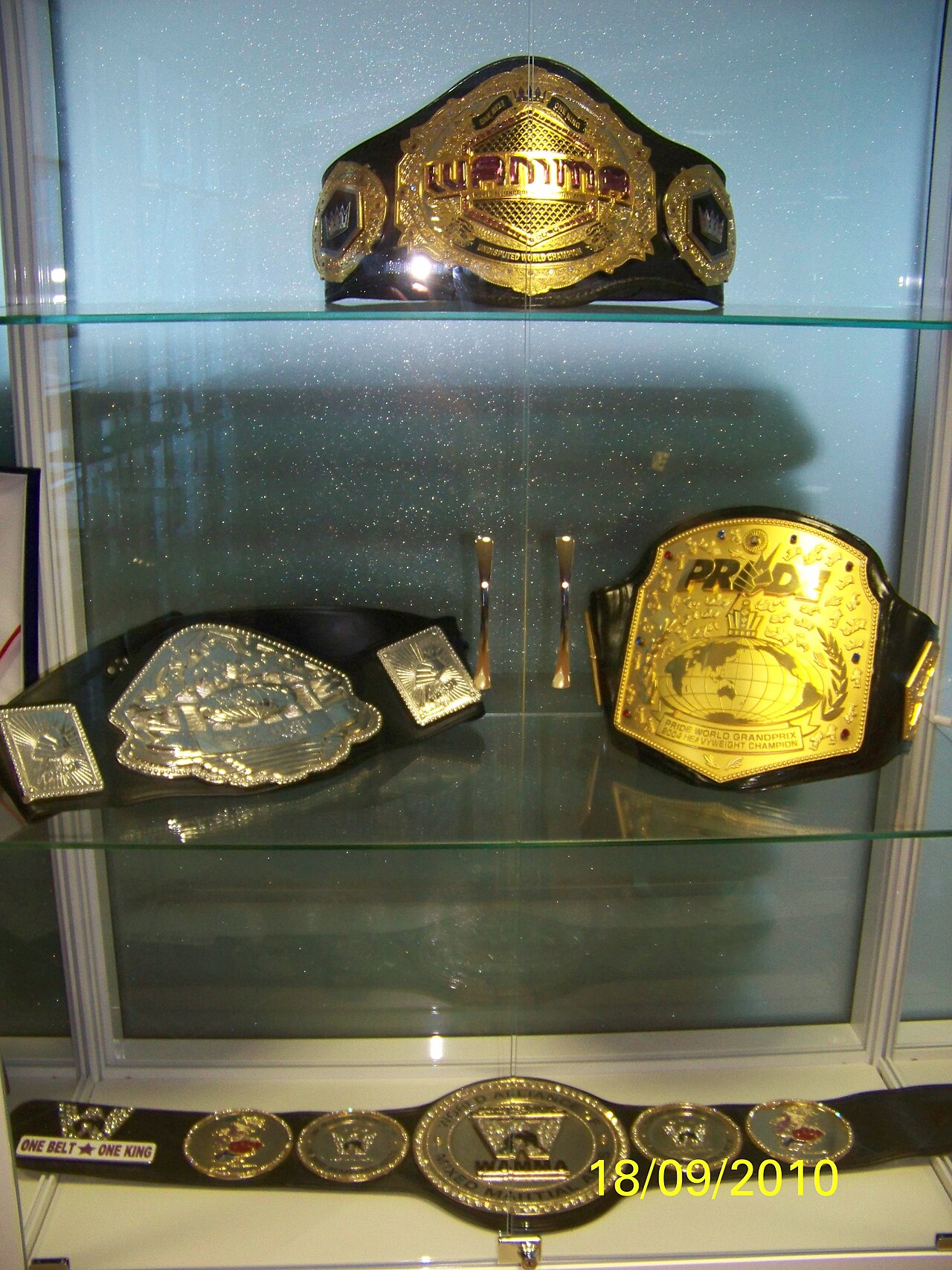
Fedor Vladimirovich Emelianenko (born 28 September 1976) is a Russian former professional mixed martial artist, sambist, judoka and politician. He was the PRIDE Heavyweight Champion from 2003 to the organisation's closure in 2007, a four-time combat sambo world champion, a seven-time combat sambo national champion, and two-time Russian national judo bronze medalist. Emelianenko is widely considered to be one of the greatest MMA fighters of all time, consistently ranked as the top heavyweight fighter from 2003 until 2010, and the best fighter of the 2000s. His career helped popularize the sport of MMA in his home country of Russia after gaining attention in Japan, South Korea, the United States, and worldwide.
- known_for
- PRIDE Heavyweight Champion (2003–2007); first loss to Tsuyoshi Kohsaka in Decemb
Verified Timeline
Lore & Background
Emelianenko was born in 1976 in Rubizhne, Luhansk Oblast, Ukrainian SSR, Soviet Union. In 1978, when he was two, his family moved to Stary Oskol, Belgorod of the Russian SFSR. At age 11, he began to practice sambo and judo under Vasily Ivanovich Gavrilov. A year later, he was admitted to sport classes taught by Vladimir Voronov. He finished high school in 1991 and graduated with honors from a professional trade school as an electrician in 1994. From 1995 to 1997, he served in the Russian Army as a military firefighter and then as a member of the tank division near Nizhny Novgorod. In 1997, he received the certification of 'Master of Sport' in judo and sambo and became part of the Russian national team. In 2000, due to a lack of money, he left the Russian national team and began to compete professionally in MMA. Emelianenko began his MMA career on May 21, 2000, compiling four straight victories before a controversial loss to Tsuyoshi Kohsaka on 22 December 2000 via doctor stoppage due to a cut 17 seconds into the fight. The controversy stemmed from the fact elbow strikes were illegal for the event. After defeating Renato Sobral, he fought for the World Heavyweight Class Championship against Bobby Hoffman, who forfeited, and Emelianenko was awarded the RINGS Heavyweight Class Championship. Entering PRIDE, he debuted at Pride 21 on 23 June 2002 against Semmy Schilt, winning by unanimous decision. He then defeated Heath Herring by doctor-stoppage to become the number-one heavyweight contender. On 16 March 2003 at Pride 25, he defeated Antônio Rodrigo Nogueira by unanimous decision to become the second PRIDE Heavyweight Champion, a title he would never lose. He defended the title against Kazuyuki Fujita (submission via rear naked choke at 4:17 of round one) and Gary Goodridge (referee stoppage via ground and pound in round one). His fight against Yuji Nagata at Inoki Bom-Ba-Ye 2003 ended the same way, with Emelianenko knocking Nagata down twice before finishing him. In the 2004 Heavyweight World Grand Prix, he submitted Kevin Randleman with a kimura armlock 1:33 into the first round after being slammed with a German suplex, and then defeated Naoya Ogawa by armbar in the semifinals. Emelianenko was unbeaten in his first 28 fights up until June 2010, including wins over four former UFC champions, one future Strikeforce champion, two PRIDE champions, one former and two future K-1 champions, one Pancrase champion, and two Olympic medalists. He originally retired in June 2012 with a record of 34 wins and 4 losses before returning in December 2015. He retired for the second and final time on February 4, 2023, with a record of 40 wins, 7 losses, and 1 no contest, holding wins over seven (one interim) former UFC champions. He began his political career in 2010, being elected as a deputy of the Belgorod Regional Duma. He subsequently became president of the Russian MMA Union (later honorary president and chairman of the supervisory board), and a staff member of Russia's Council of Physical Fitness & Sports.
Reader's Guide
Fedor Emelianenko is widely considered to be one of the greatest MMA fighters of all time, consistently ranked as the top heavyweight fighter from 2003 until 2010, and the best fighter of the 2000s. He is regarded as the most prominent fighter never to compete in the UFC. Fight Matrix currently ranks him as by far the greatest heavyweight mixed martial artist of all time, and the fourth greatest fighter of all time pound-for-pound. His career helped popularize the sport of MMA in his home country of Russia after gaining attention in Japan, South Korea, the United States, and worldwide. Emelianenko held the PRIDE Heavyweight Championship from 2003 until the organization's closure in 2007 without ever losing the title. His unbeaten streak of 28 fights included victories over four former UFC champions, one future Strikeforce champion, two PRIDE champions, one former and two future K-1 champions, one Pancrase champion, and two Olympic medalists. Beyond competition, he served as a deputy of the Belgorod Regional Duma, president of the Russian MMA Union, and a staff member of Russia's Council of Physical Fitness & Sports, contributing to the sport's governance in Russia.
Did You Know?
- Emelianenko's first loss came via doctor stoppage 17 seconds into the fight due to a cut caused by an elbow strike that was illegal for the event.
- He was slammed headfirst with a German suplex by Kevin Randleman but submitted him with a kimura armlock 1:33 into the first round.
- Emelianenko served in the Russian Army from 1995 to 1997 as a military firefighter and then as a member of the tank division.
- He graduated with honors from a professional trade school as an electrician in 1994.
- Emelianenko's father was a welder and his mother was a teacher.
Career & Achievements
Fedor Emelianenko's professional record stands as one of the most dominant in heavyweight combat sports history. He entered the cage on May 21, 2000, and compiled four consecutive victories before a controversial stoppage in December of that year. From that point forward, he went unbeaten for 28 straight contests, a streak that lasted until June 2010. During that remarkable run, he defeated four former UFC champions, a future Strikeforce champion, two PRIDE champions, a former and two future K-1 champions, a Pancrase champion, and two Olympic medalists. He held the PRIDE Heavyweight Championship from 2003 until the promotion folded in 2007. Beyond MMA, he captured four combat sambo world titles, seven national combat sambo championships, and two Russian national judo bronze medals. His final record, upon his second retirement on February 4, 2023, stood at 40 wins, 7 losses, and 1 no contest, with victories over seven former UFC champions (one interim). Fight Matrix ranks him as the greatest heavyweight MMA fighter of all time and the fourth greatest fighter pound-for-pound.
The Road to the Top
Emelianenko's ascent through the ranks was marked by both controversy and dominance. His first professional loss came on December 22, 2000, at King of Kings 2000 Block B, when a missed looping punch from Tsuyoshi Kohsaka resulted in an elbow striking his head and reopening a cut from an earlier fight. The stoppage was controversial because elbow strikes were illegal at that event. Just weeks later, he claimed the RINGS Heavyweight Class Championship by default when Bobby Hoffman forfeited due to a shoulder injury. Entering PRIDE on the back of his King of Kings 2002 tournament victory, he faced the towering Semmy Schilt at Pride 21 in June 2002, winning by unanimous decision. He then dominated Heath Herring with ground-and-pound, forcing a doctor stoppage after the first round. His path to the PRIDE Heavyweight Championship at Pride 25 in March 2003 saw him challenge the heavily favored Antônio Rodrigo Nogueira, who had defeated Mark Coleman, Herring, and Bob Sapp, and had won the 2000 King of Kings tournament in which Emelianenko had also competed.
Roots & Foundation
Fedor Emelianenko was born on September 28, 1976, in Rubizhne, Luhansk Oblast, within the Ukrainian SSR. When he was just two years old, his family relocated to Stary Oskol in the Belgorod region of the Russian SFSR. His mother, Olga, worked as a teacher, while his father, Vladimir, was a welder. At eleven, he began training in sambo and judo under coach Vasily Gavrilov, and a year later joined the classes of Vladimir Voronov. Voronov noted that the young Emelianenko did not initially stand out among his peers; his eventual greatness came from years of relentless perseverance and hard work. Voronov passed away in August 2020 from coronavirus complications. Emelianenko graduated high school in 1991 and earned an electrician's trade certification in 1994. He then served in the Russian Army from 1995 to 1997 as a military firefighter and later in a tank division near Nizhny Novgorod, a period during which his parents divorced. In 1997, he earned his Master of Sport certification in judo and sambo and joined the Russian national team. By 2000, financial hardship forced him to leave the national squad and pursue professional MMA.
Beyond the Cage
Emelianenko's influence extended well beyond the fighting circuit. His career played a pivotal role in popularizing mixed martial arts across Russia, a country where the sport had previously received limited domestic attention. His fame, built in Japan, South Korea, the United States, and around the world, brought a new generation of Russian fans to the sport. He is widely regarded as the most prominent heavyweight fighter who never stepped into a UFC octagon, a distinction that underscores his unique place in MMA history. After his first retirement in June 2012, he turned his attention to public service. In 2010, he was elected as a deputy of the Belgorod Regional Duma. He went on to serve as president of the Russian MMA Union, later becoming its honorary president and chairman of the supervisory board. He also joined the staff of Russia's Council of Physical Fitness and Sports. His training network spanned multiple countries and disciplines—he was affiliated with Russian Top Team, Red Devil Sport Club in St. Petersburg, and the VOS gym in the Netherlands, where he trained alongside figures like Ernesto Hoost and Tyrone Spong. His manager, Vadim Finkelchtein, worked with him until his first retirement.
Gallery
Frequently Asked Questions
Who is Fedor Emelianenko?
Fedor Vladimirovich Emelianenko (born 28 September 1976) is a Russian former professional mixed martial artist, sambist, judoka, and politician. He held the PRIDE Heavyweight Championship from 2003 until the promotion's 2007 shutdown and is widely regarded as the greatest heavyweight MMA fighter in the sport's history.
What are Fedor Emelianenko's major titles and achievements?
He was the PRIDE Heavyweight Champion (2003–2007) and a four-time combat sambo world champion. His career took him across Japan, South Korea, the United States, and Russia, and his success in those markets helped popularize MMA in his home country.
What was Fedor Emelianenko's first professional loss?
His first career defeat came in December 2000 against Tsuyoshi Kohsaka. Before that fight he had never lost a professional bout and was already a dominant force in the heavyweight division.
Why is Fedor Emelianenko considered the GOAT of heavyweight MMA?
Fans and analysts cite his sustained dominance across multiple countries and organizations, his well-rounded skill set in grappling, striking, and wrestling, and his long reign atop PRIDE's heavyweight division. Competing at an elite level in Japan, the U.S., and Russia with minimal losses set a standard that later heavyweights are still measured against.
What did Fedor Emelianenko do after retiring from fighting?
After stepping away from professional MMA, he moved into Russian politics. He is now commonly described as a Russian politician in addition to his celebrated athletic career.
More in Martial Arts And Combat Sports 1-24
Elsewhere in the Martial Arts And Combat Sports universe
Spotted an error? Know more?
This is a living reference — every entry is fact-audited, and reader corrections feed straight into our audit queue. Suggest an edit · See this site's audit record